Women Fighting for Abortion Access Throughout History
Women's History Month 2026
With the Dobbs decision taking out more than 50 years of precedent on privacy and access to abortion care, we thought Women’s History Month was the perfect time to put a spotlight on three women who protected or gave access to necessary reproductive healthcare; one helped forge a legal path to protecting abortion rights, one provided safe abortion care before Roe, and another ensures people can access medication abortion in states that are denying that care today!
Florynce Kennedy
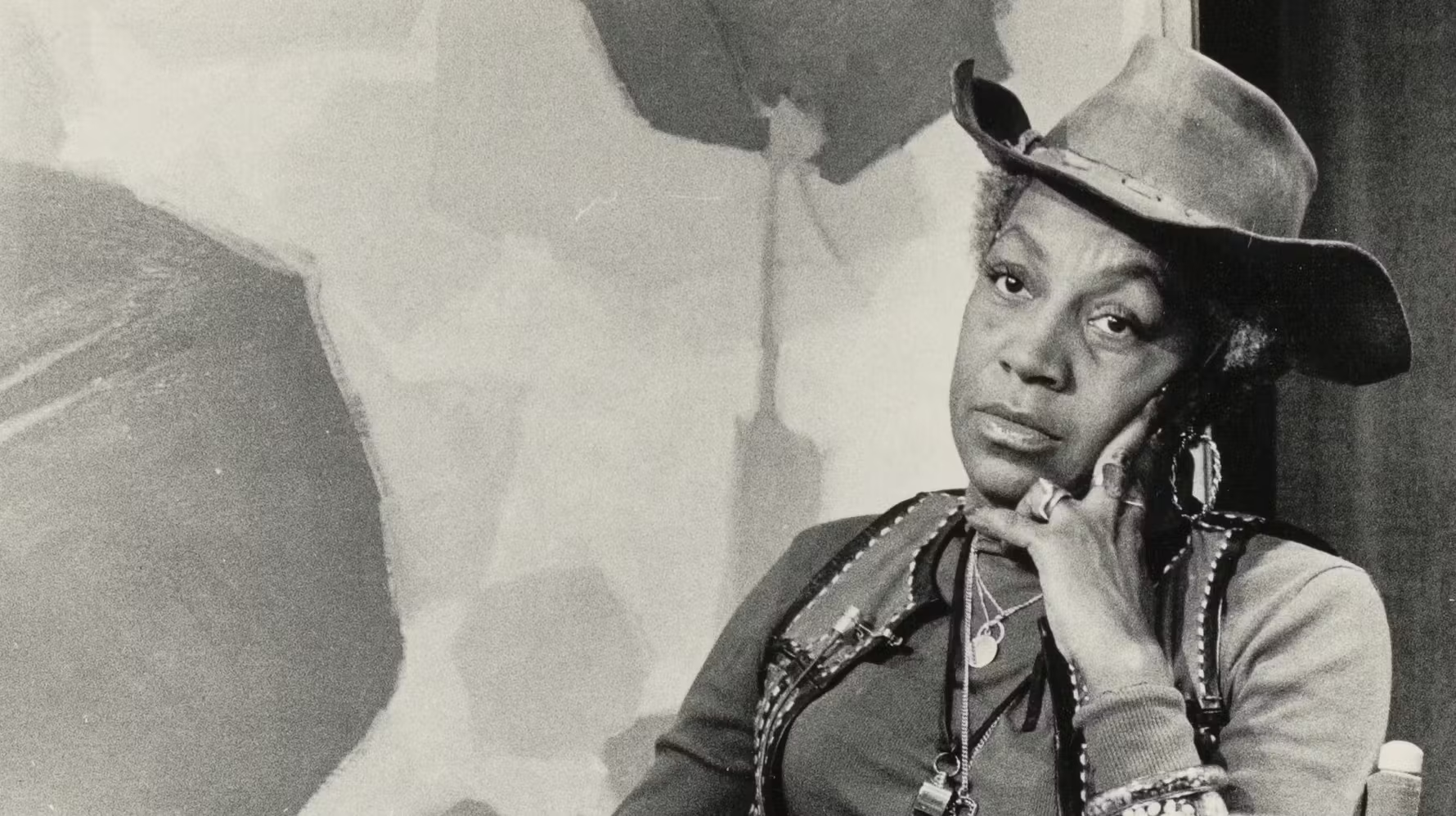
A brilliant activist with a legal mind, Florynce Kennedy applied to Columbia Law School in 1948. After she was denied admission by the dean, she confronted him on what she thought was a racial bias in admissions. After threatening to sue on the grounds of discrimination, the dean assured her that race was not the issue, but instead it was her gender. Kennedy couldn’t allow any type of discrimination to stand so she fought for her place at Columbia Law. She eventually got the dean to change his decision and she was admitted as one of just a few female students attending at the time.
Before Roe was decided in 1973, there was a confluence of leadership and knowledge between the feminist and civil rights movements of the 1960s. Out of these movements, the fight to legalize abortion care through Abramowicz v. Lefkowitz was born.
Kennedy worked on the Abramowicz lawsuit, a class action suit filed in 1970 that aimed to repeal New York’s strict abortion laws as the first constitutional challenge to abortion.
As part of Kennedy’s strategy, she centered the women who experienced illegal abortion care and put them on the stand to testify instead of focusing on the mostly male doctors and medical professionals.
This strategy eventually led to the Supreme Court deciding Roe v. Wade in 1973; giving pregnant people a Constitutional right to abortion care in the first two trimesters of pregnancy.
Kennedy’s work paved the way for 50 years of legal precedent that was relied upon until the recent Dobbs decision.
Heather Booth and the Jane Collective

The Abortion Counseling Service of Women’s Liberation (also known as the Jane Collective or the Jane Network), was an underground abortion counseling service and provider network in Chicago. It was active from 1969 to 1973, at a time when abortion was illegal in most of the U.S. and was considered felony homicide in the state of Illinois.
The foundation for the Jane Collective was laid when Heather Booth helped a friend’s sister obtain an abortion in 1965. The hoops they had to jump through to access safe (though illegal) healthcare were impossible for most young women to navigate and Heather wanted to remove those barriers.
The Jane Collective spread through word of mouth, especially in the poorer South and East sides of Chicago at the time. The organization also posted signs across the city that read, “Pregnant? Don’t want to be? Call Jane.”
Heather and the Jane Collective created an entirely underground network where anonymous women who no longer wanted to be pregnant could call a hotline number, leave a message with their name, number, and date of their last period. A “Jane” would call the woman back, counsel her on her options, and then if needed, would schedule an appointment with a doctor who provided abortion services through the network.
The patients would meet at the home of a volunteer and would be driven from there to “The Place”, often the home or office of another Jane Collective member, where a doctor would perform the abortion. Volunteers would follow up with the patient a few weeks after the procedure to ensure everything went smoothly.
Information on every location in the process, patient name, and even the volunteers were kept secret to protect the identities of those involved. The procedures normally cost up to $500, though the Jane Network only charged $100. And they often just accepted whatever a patient could afford to pay.
In 1971, the Collective learned that the man providing the abortions was not really a doctor at all, but a man who was taught by a doctor to perform the typically simple procedure. This caused about half of the Collective to disband.
The remaining members of the Collective realized that they were providing a very necessary service in safe, clean conditions with skill – sometimes up to 20 abortions per day. Four of the members learned to do the procedure themselves to keep the Collective operating, and then were able to lower the cost even more since they no longer needed to pay the man who had been providing them.
A Black patient named Lois criticized the group when she came to them for an abortion, noting their lack of diversity. They were almost entirely white and upper middle class. She stated, “You guys are the white angels that are going to save everybody and where are the black women at?” Lois joined the Collective to counsel its Black patients.
After a police raid in 1972, seven of the women from the Jane Collective were arrested and hit with 11 charges of abortion or conspiracy to commit abortion. Each charge carried a possible sentence of up to 10 years. Their lawyer had the case delayed while they awaited the expected Roe verdict, and after the Supreme Court decision the charges against the Jane Collective members were dropped.
The Jane Collective, founded by Heather Booth, performed an estimated 11,000 abortions. There were no reports of abortion-related death as a result of their work. Patients who went to the hospital afterward were usually admitted by doctors who were aligned with the Collective, so they could care for patients in an understanding way without criminal or legal involvement.
Verónica Cruz Sánchez
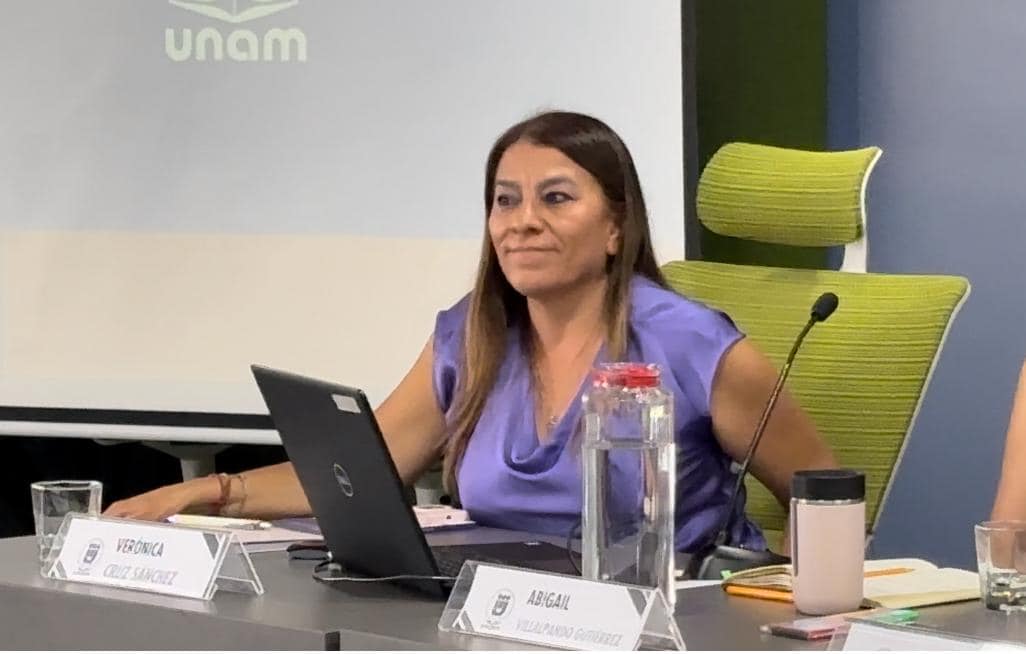
Since 2000, Verónica Cruz Sánchez and her Las Libres network have been distributing misoprostol across the state of Guanajuato in Mexico since Guanajuato legislators made abortion illegal even for rape victims. Women were subjected to years in prison if they were caught getting an abortion. Cruz protested these laws but she wanted to do more to ensure people could still access abortion care, so she created Las Libres – “the free ones”.
Las Libres started by asking pregnant people who were able to get misoprostol to save the remainder of the medication they received. They were then asked to give their unneeded pills to someone else who needed an abortion, and explain how the process went for them so they understood what to expect.
In this way, pregnant women in Mexico could hear from a woman who had an abortion first-hand and see that she was not only ok, but was continuing with her life. Cruz called the woman who shared her pills and her experience an acompañante—a person who accompanies another. (Mexico finally decriminalized abortion in 2023, though individual states have different implementation of the law, much like in the United States.)
Cruz’ work over the last 25 years inspired not only similar networks in other Mexican states where abortion was illegal, but it recently expanded into the United States!
After Texas passed a near total abortion ban in May of 2021 and other U.S. states began following suit, Cruz received hundreds of messages from people asking how they could help women in the U.S.
American ex-pats living in Mexico joined Las Libres network. Individuals in Mexico were able to procure the abortion medication in bulk from pharmacies without a prescription because it’s main labelled use is for ulcers. The buyers would then give the medication to the American ex-pats that they called “The Old Hippies”, who would pack the medication into their own belongings and cross the border back into the United States to deliver batches of abortion medication to volunteers who could distribute it in the U.S. to people who needed it.
The secrecy of the network ensured that no group of volunteers knew anything about the other groups.
Despite threats of imprisonment and fines, everyone in the Las Libres network does this work because they believe that access to abortion care should be accessible and affordable to all. The Las Libres network has approximately 300 volunteers in the U.S. right now and they are thought to have assisted about 10,000 women so far.
Cruz’s work continues in light of additional state restrictions against abortion since Dobbs. She gets at least 50 messages a day via Signal, Slack, text, WhatsApp, and other channels from people who need her help in the United States. Until the work of Las Libres is no longer needed, Cruz and her dedicated network of volunteers and acompañantes will be in this fight.
Sources used in this post:
- Zinn education project: People’s History of Abortion Care in the United States
- L’officiel: Who Was Flo Kennedy? Learn All About the Fiery Black Feminist and Civil Rights Activist
- Wikipedia: Florynce Kennedy
- Wikipedia: Jane Collective
- Politico: Inside the 1970s Abortion Underground
- Time magazine: This Mexican Activist Is Helping Americans Defy Abortion Bans
- New Yorker magazine: The Post-Roe Abortion Underground
- NPR: How a network of women in Latin America transformed safe, self-managed abortions
Photo credits:
- Florynce Kennedy. Photo credit: Harvard Radcliffe School.
- The Jane Collective mugshots. Photo credit: All That’s Interesting.
- Verónica Cruz Sánchez. Photo credit: Las Libres facebook page.